How to Start Selling Online in Malaysia
By Kelie Wong · 20th August, 2026
Table of Contents
How to Start Selling Online in Malaysia and Grow Across Channels
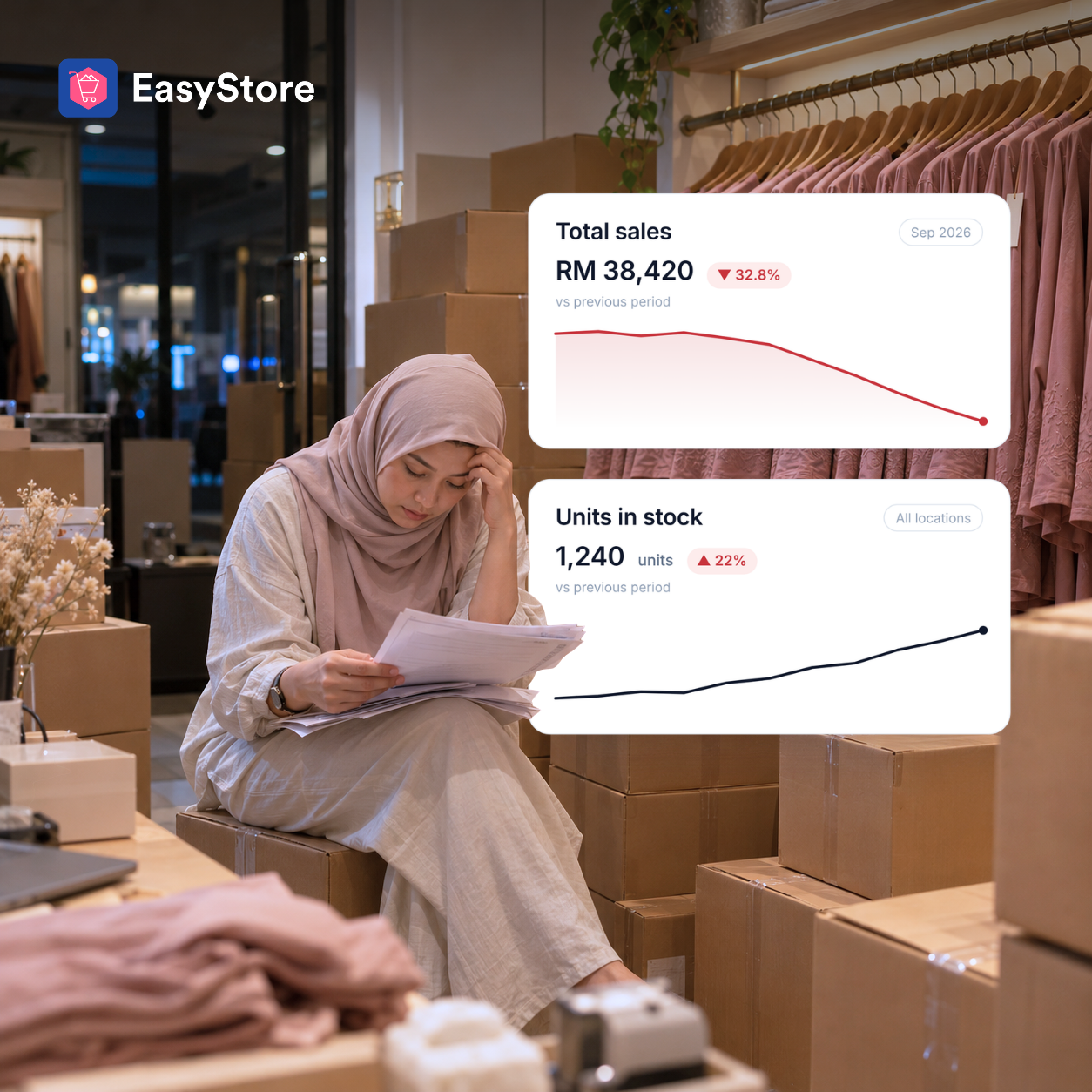
Many businesses begin selling through a single marketplace or social channel, then run into scattered orders, overselling and customer data split across platforms.
A stronger starting point is a branded online store connected to the channels your customers already use.
EasyStore brings your online store, marketplaces, social and live selling, payments, fulfilment, inventory and customer data into one system.
You can focus on making your first sale while building an operation that is ready for repeat customers, new channels and future retail expansion.
1. Choose the Right Starting Point
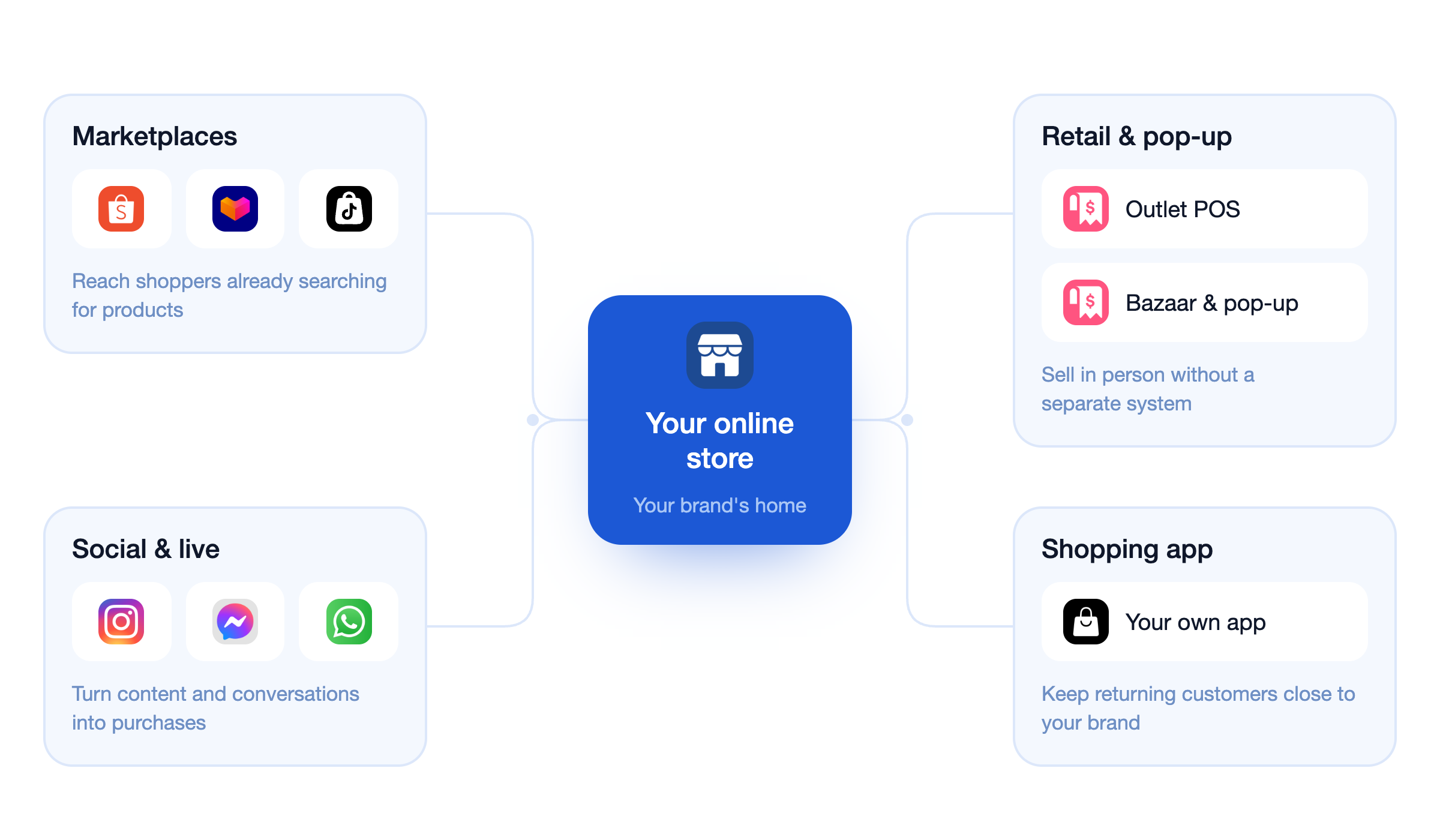
You do not need to launch on every sales channel at once. Start with the channels that match how your customers discover and buy products.
Your online store
Your online store acts as your brand’s digital home. It gives you greater control over your branding, product presentation and customer relationships.
Unlike a marketplace listing, your online store gives customers a dedicated place to understand your business, explore your full product range and purchase directly from your brand.
Marketplaces
Marketplaces such as Shopee, Lazada and TikTok Shop can help you reach shoppers who are already searching for products.
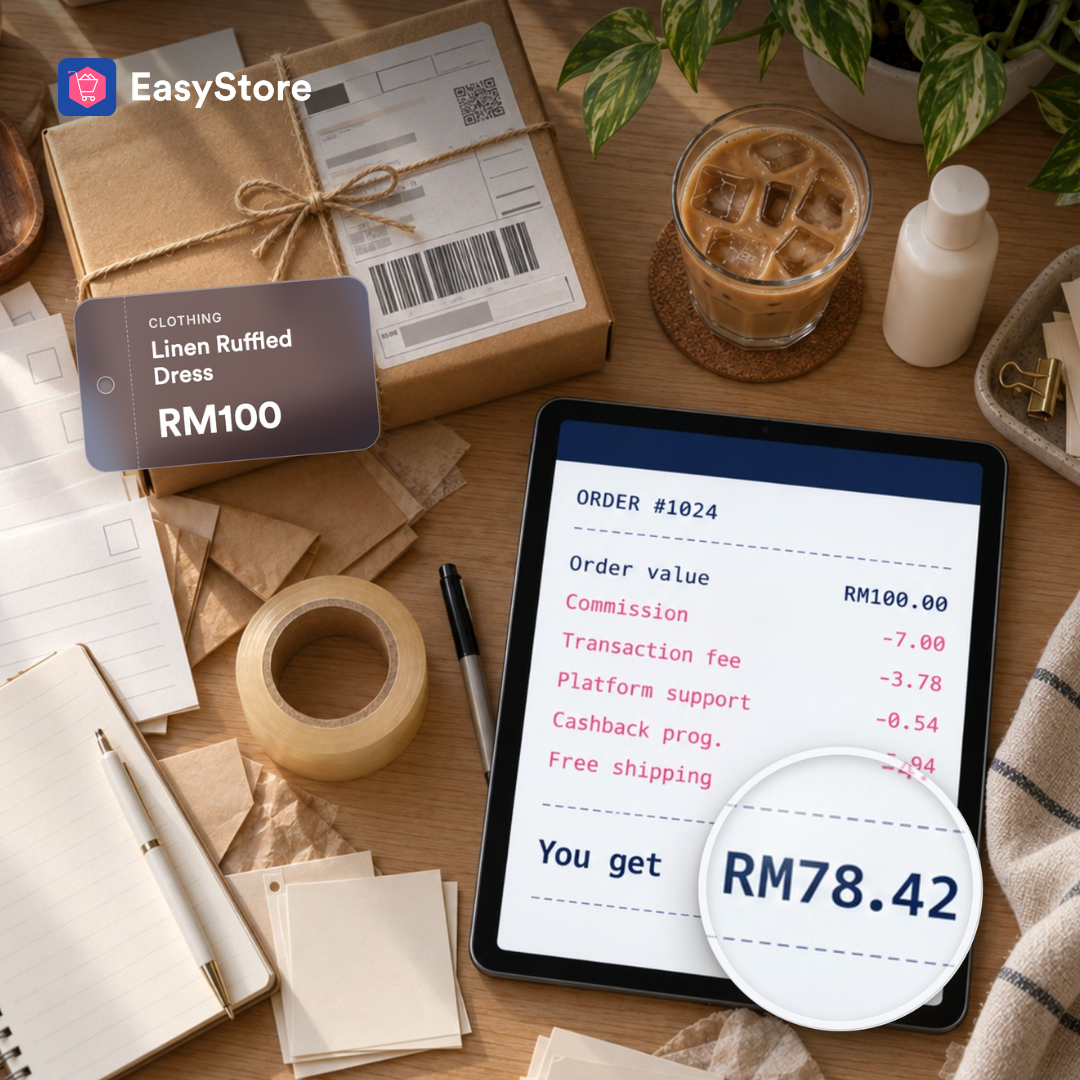
However, depending on the category and programmes involved, combined marketplace commissions and related fees can take up to around 30–40% of an order’s value in some cases. This can significantly affect your profit margins.
Connecting marketplaces to your own online store gives you the reach of these platforms while building a direct sales channel with greater control over margins, branding and customer relationships.
Social and live selling
Facebook, Instagram, TikTok and live selling help turn content and conversations into purchases. They are especially useful for product demonstrations, launches and community engagement.
When these channels are connected to your central commerce system, their orders can be managed alongside your online store and marketplace sales.
The goal is not simply to appear on more channels. It is to create a connected shopping experience wherever your customers choose to buy.
2. Build a Trusted Online Presence
Customers are more likely to buy from a store that looks credible, explains its products clearly and makes important information easy to find.
Your online store should reflect your brand through a recognisable domain, consistent visual identity, strong product photography and straightforward navigation.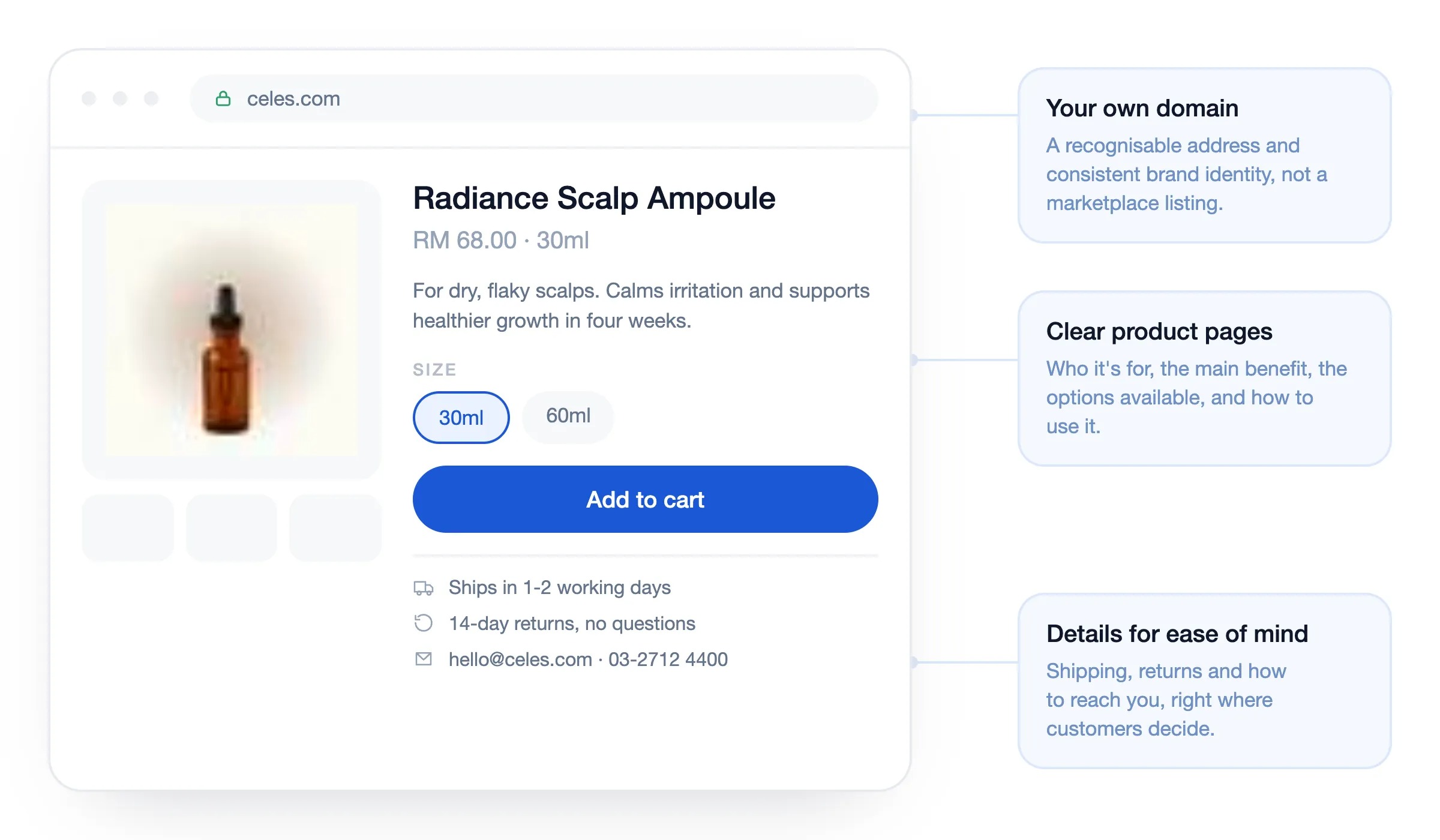
- Each product page should clearly explain who the product is for, its main benefits, available options and how it should be used.
- Shipping, return and refund information should also be easy to understand.
- About Us page and accessible contact details can help reassure first-time customers.
3. Make Checkout Convenient
A good-looking online store still needs a smooth checkout experience.
Customers should be able to use payment and delivery methods that are familiar to them. Depending on the business, this may include online banking, cards, e-wallets, home delivery, self-pickup or in-store collection.
Before launching, review the complete purchase journey—from adding a product and selecting delivery to making payment and receiving confirmation. 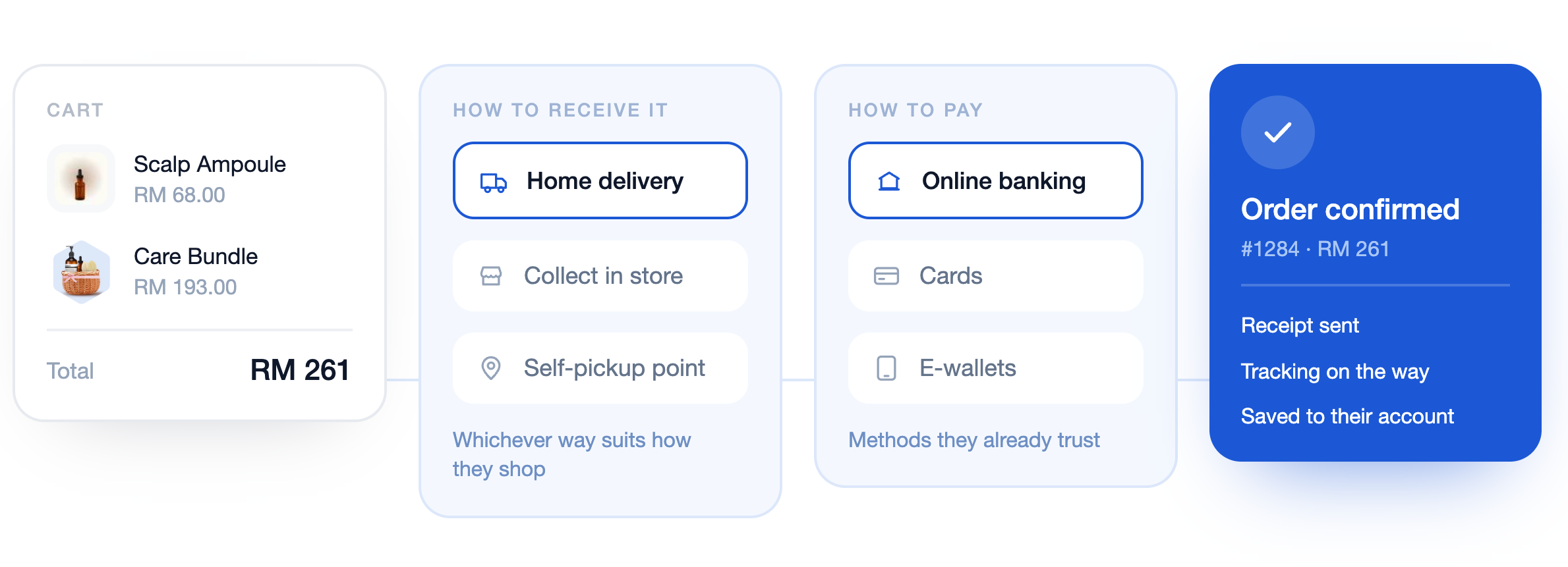
This helps identify unclear instructions, incorrect charges or missing information before they affect a customer.
A convenient checkout does more than complete the transaction. It gives customers confidence in the brand and makes them more likely to return.
4. Connect Your Sales Channels
As your business expands, managing every channel separately can create duplicated work and inventory mistakes.
EasyStore’s unified commerce platform connects your online store with marketplaces, social commerce and live selling.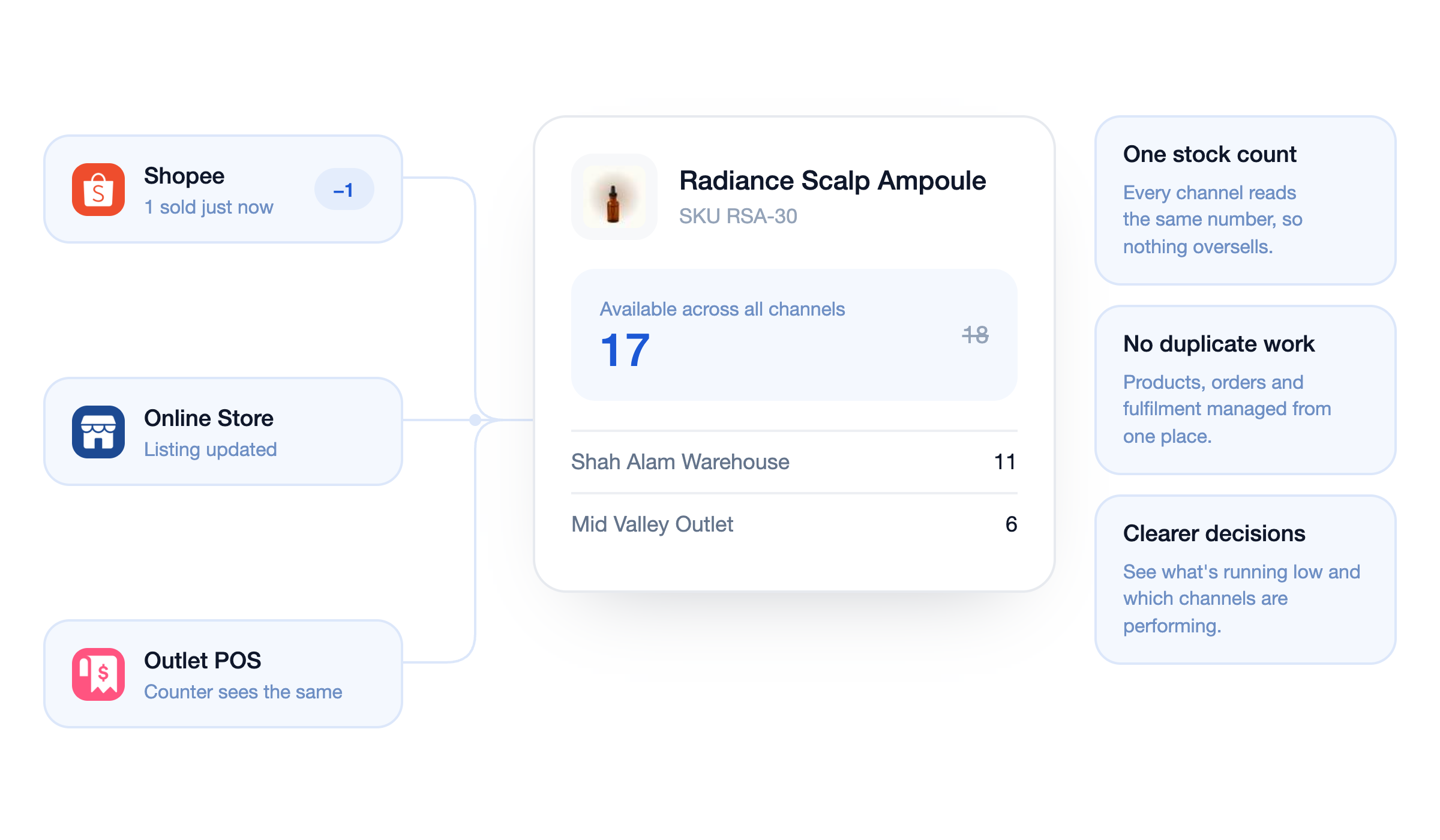
Products, orders, inventory and fulfilment can be managed from one place.
When a connected product is sold through a marketplace, its available inventory can be updated in EasyStore, giving your team a clearer view of what remains available across the business.
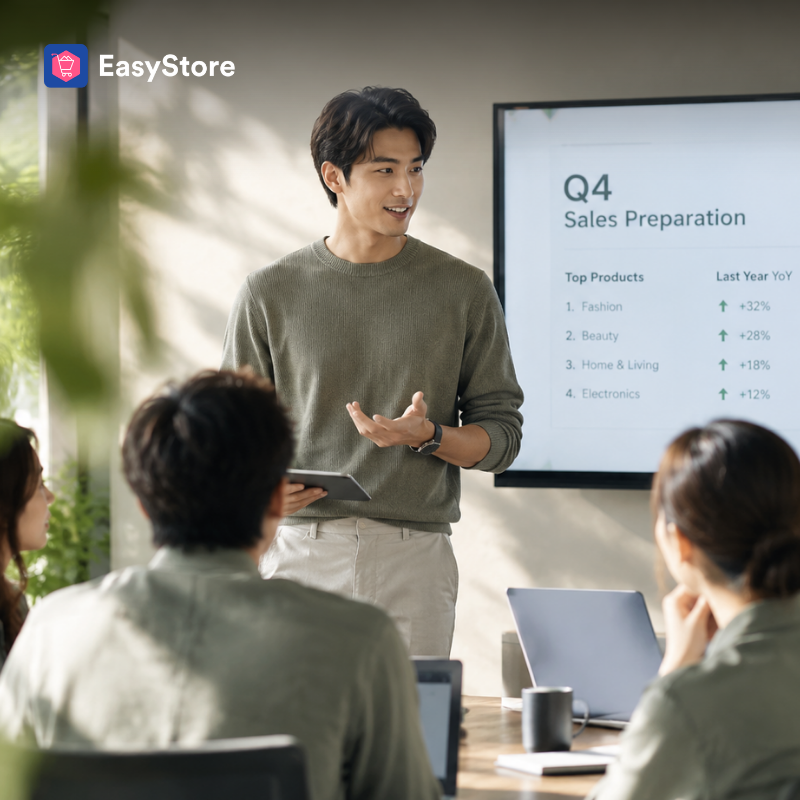
Centralising your multichannel inventory also makes it easier to identify low-stock products, plan replenishment and understand how different channels are performing.
The value of connected commerce is not simply convenience. It gives the business clearer information and a more reliable foundation for growth.
5. Turn First-Time Buyers Into Repeat Customers
Your first sale should be the beginning of the customer relationship, not the end.
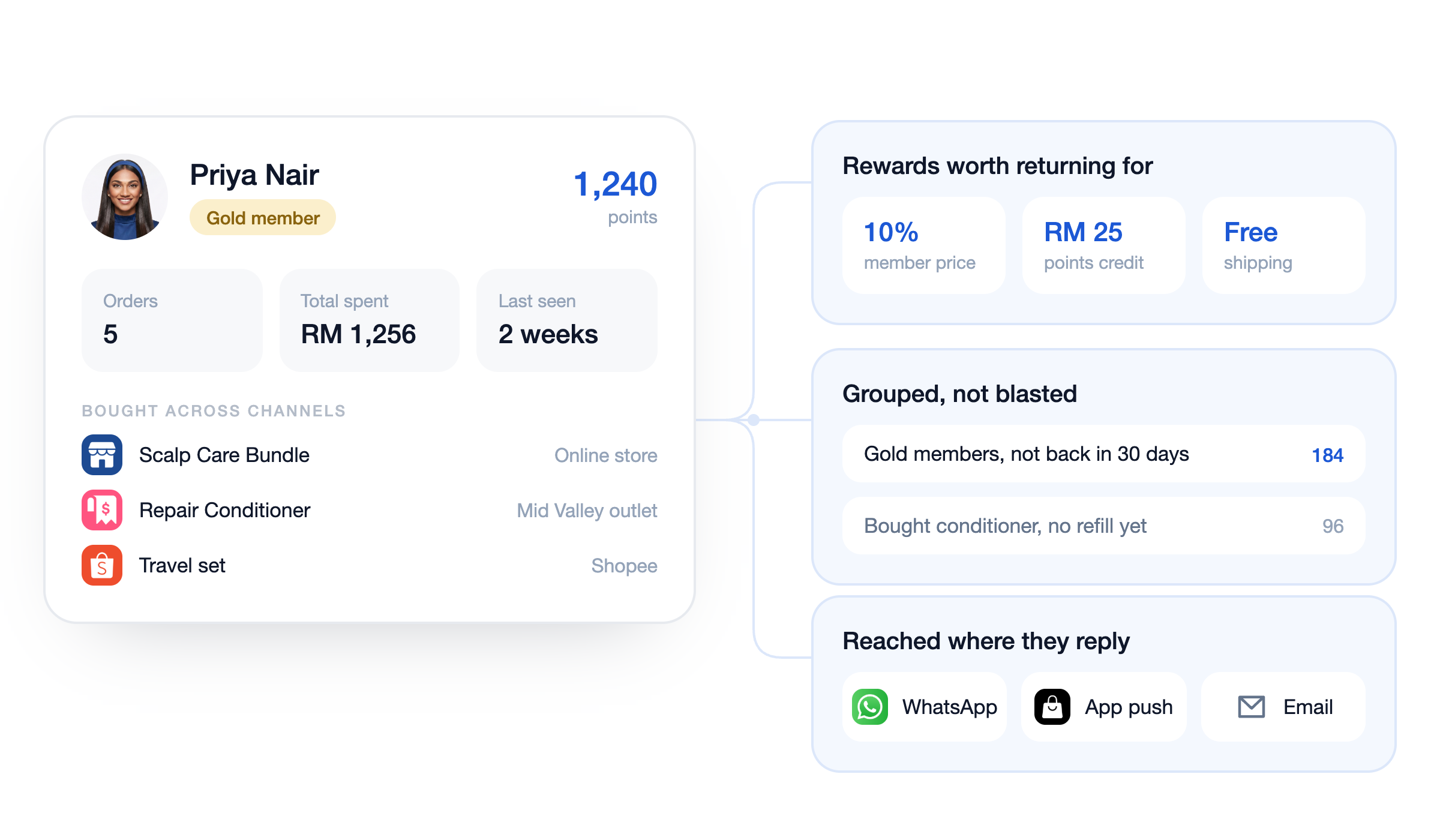
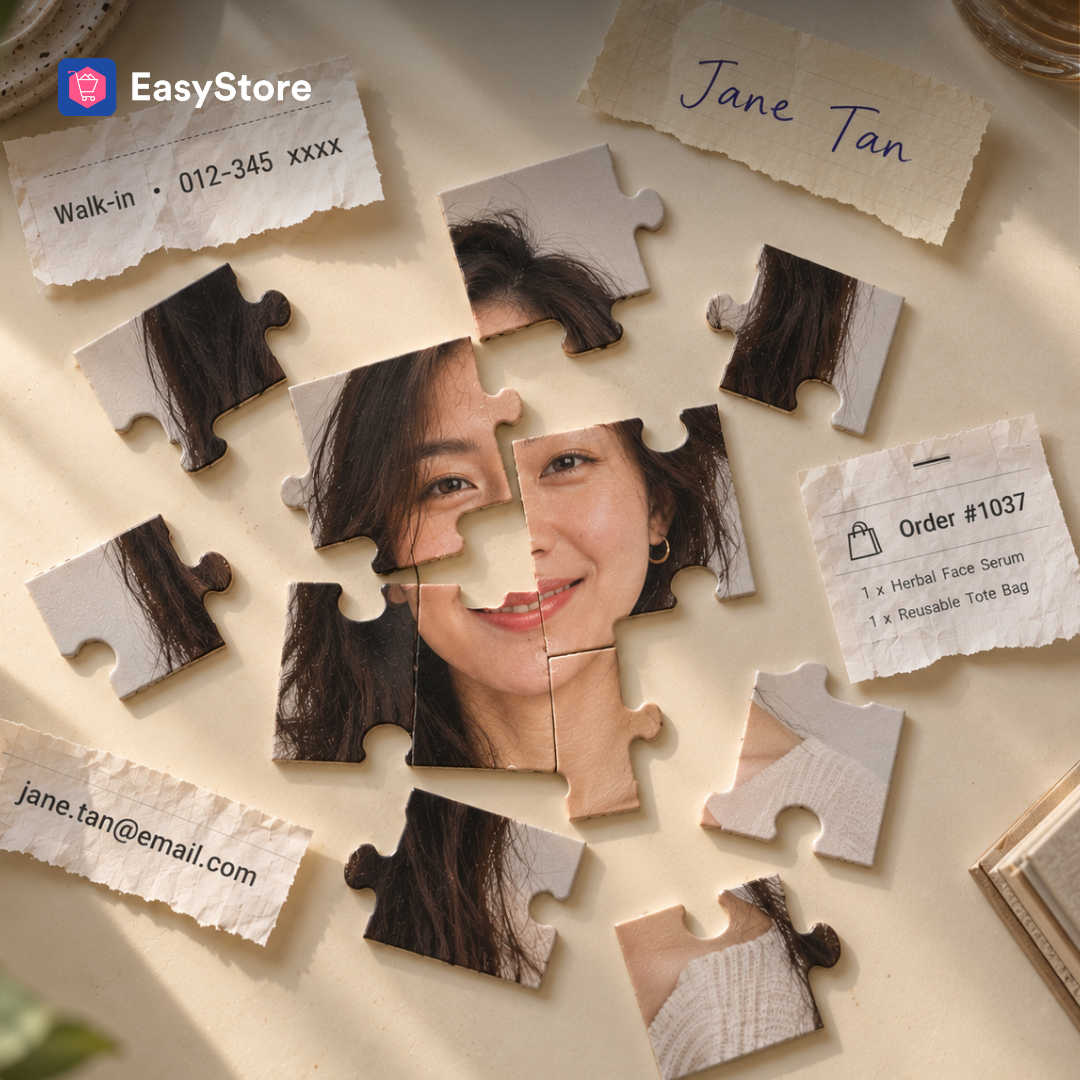
When customer and order information is connected, you can better understand what people buy, how frequently they return and which offers may be relevant to them.
Membership programmes, loyalty points, vouchers and personalised messages can encourage customers to shop again. Customer groups can also help brands communicate more meaningfully through WhatsApp, email or SMS instead of sending the same message to everyone.
Customers should receive a consistent experience whether they purchase from your website, social channel, marketplace, pop-up booth or retail outlet.
This is the foundation of a unified customer experience: recognising and serving customers consistently across every interaction with your brand.
6. Grow Without Rebuilding Your Operations
Many businesses begin online before expanding into bazaars, pop-ups or physical outlets.
If online and offline systems are disconnected, expansion creates more manual work. Teams may need to reconcile inventory, orders, customer records and loyalty points across different platforms.
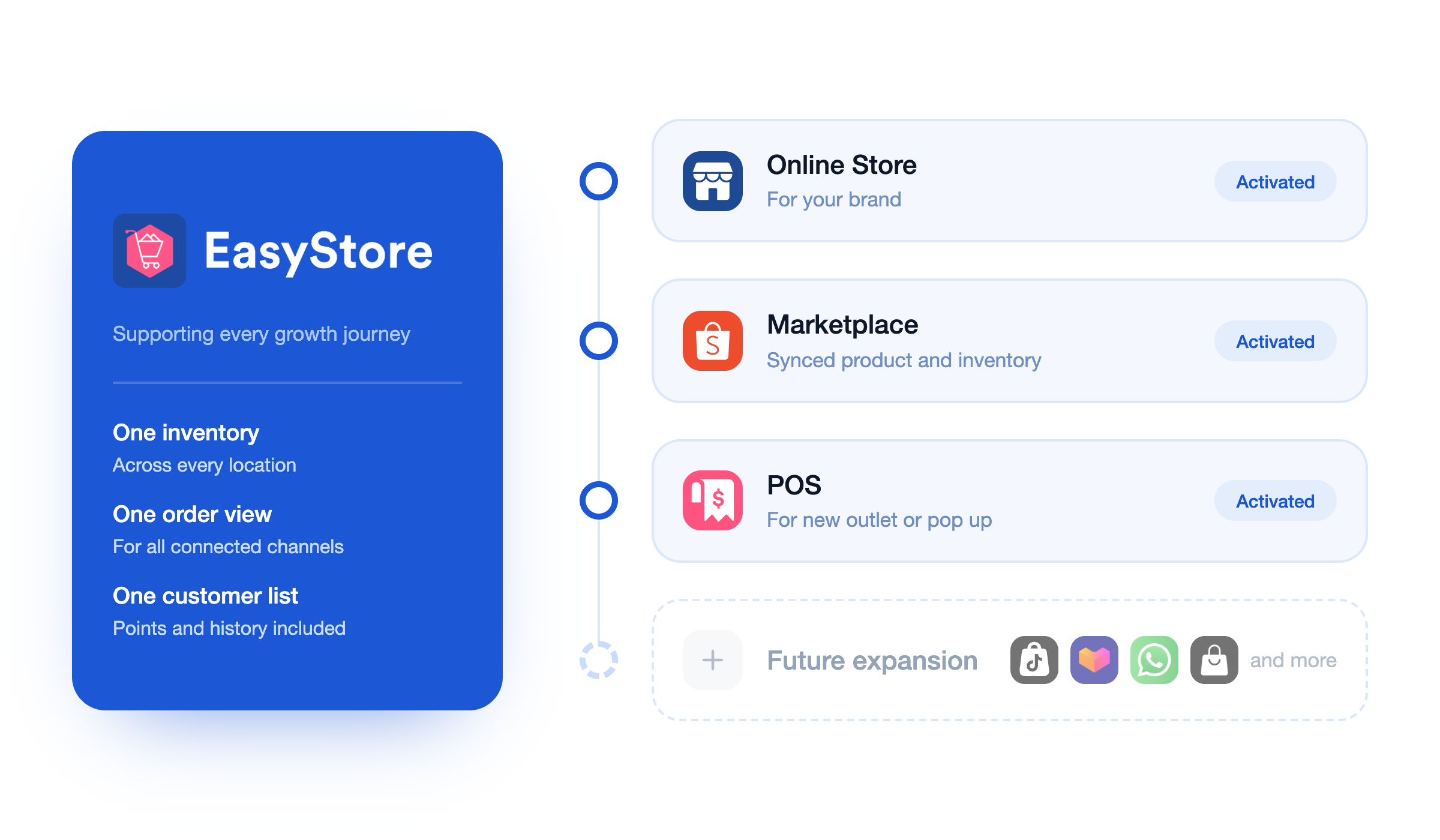
EasyStore’s Point of Sale connects physical selling with your wider commerce operations. Online and retail inventory can remain synchronised, while customer history, membership benefits and sales information stay connected across channels.
The business can also support multiple inventory locations, staff access and options such as buying online and collecting in-store.
A connected system allows you to introduce new channels and locations without rebuilding your operations every time the business reaches a new stage.
7. A Simple Readiness Check
Before expanding your online presence, consider four strategic questions:
- Does each sales channel have a clear role?
- Can products, orders and inventory remain connected?
- Is the customer experience consistent across channels?
- Can the current system support repeat purchases and future expansion?
You do not need to perfect every part of the business before making your first sale. The priority is to establish a reliable foundation that can develop alongside your customers and operations.
Make Customers Love Buying From You
EasyStore empowers your brand to prioritize customers and enhance their experience, creating a unified customer experience (UCX) that makes customers love buying from you.
Over 50,000 brands have grown their businesses by embracing unified customer experiences (UCX) strategy through EasyStore across multiple sales channels - online store, retail outlets, marketplaces, and social media, ensuring consistency in product and service offerings for a seamless shopping journey.
Embrace UCX and redefine your business success today
Discover how UCX can elevate your customer engagement with a truly unified journey for your customers, streamline operations, and drive growth across all channels.
Contact Us