You Have Your Customers' Data, But Are You Letting It Benefit Your Business?
By Erica Loh · 11th October, 2026
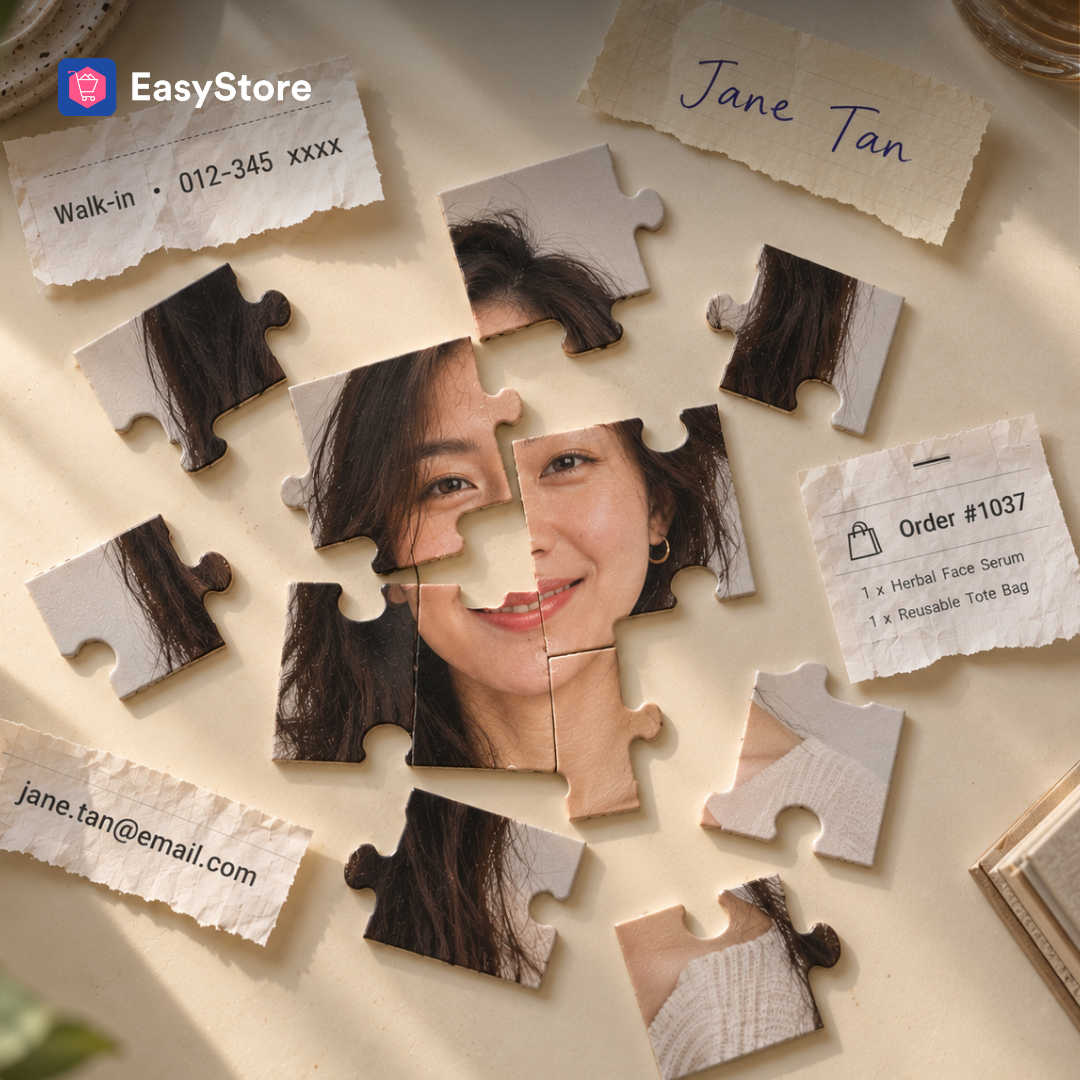
Table of Contents
You Have Your Customer’s Data, But Are You Letting It Benefit Your Business?
Jane bought a serum from your website in March. In May, she walked into your store and picked up a cleanser. In July, she found your booth at a weekend pop-up and grabbed a gift set. In August, she sent you a WhatsApp message to reorder the serum.
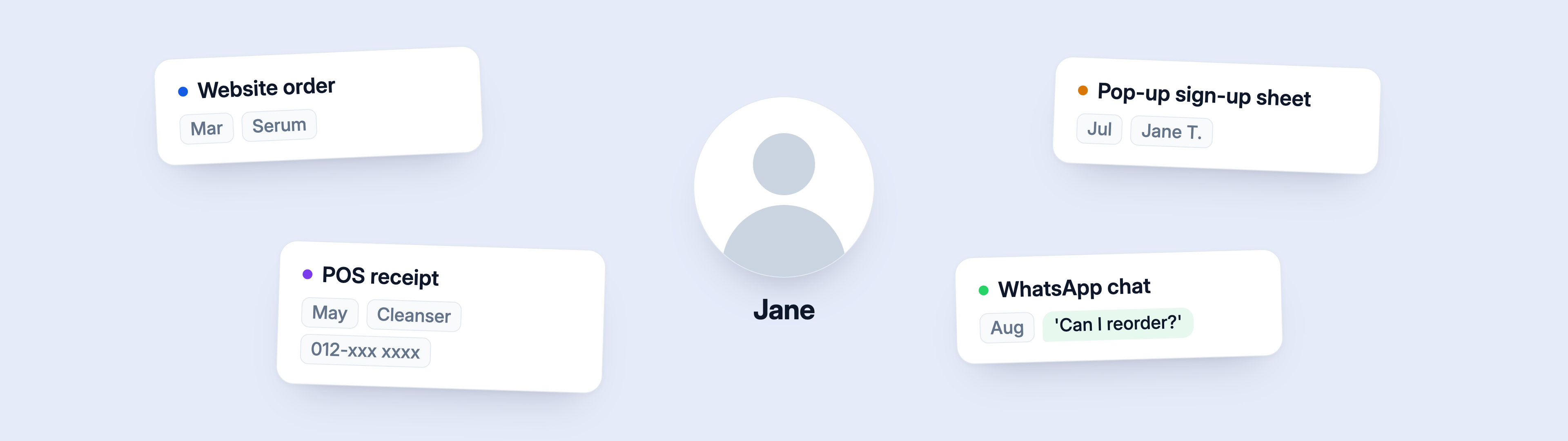 That's four purchases in six months. Jane is exactly the kind of customer every brand wants.
But to your business, she might just be four separate records: an online order, a POS receipt, a name on a sign-up sheet and a chat message.
The Cost to Your Business
When names and phone numbers sit in different spreadsheets, sign-up sheets and systems, the problem is bigger than a messy database.
It means you are repeatedly spending to “acquire” a customer who already buys from you.
It means you are pouring expenses into mechanisms that yield little return to you.
| Scattered data | Unified data |
|---|---|
| Unclear revenue sources. You don’t know which customers or channels are contributing to your sales. | Clear revenue sources. You can see which customers and channels drive your sales. |
| Blanket discounts. Everyone gets the same offer, including customers who would have paid full price. | Targeted campaigns. Offers go to the customers who need a reason to buy. |
| Higher acquisition cost. You can’t tell which marketing spend actually pays off, so budget keeps going to campaigns that don’t. | Clear marketing ROI. You can see which campaigns bring customers back, and cut the ones that don’t. |
Turn Cold Data Into Actionable Customer Insights
Customer data is a record of what happened. A customer profile is who it happened with.
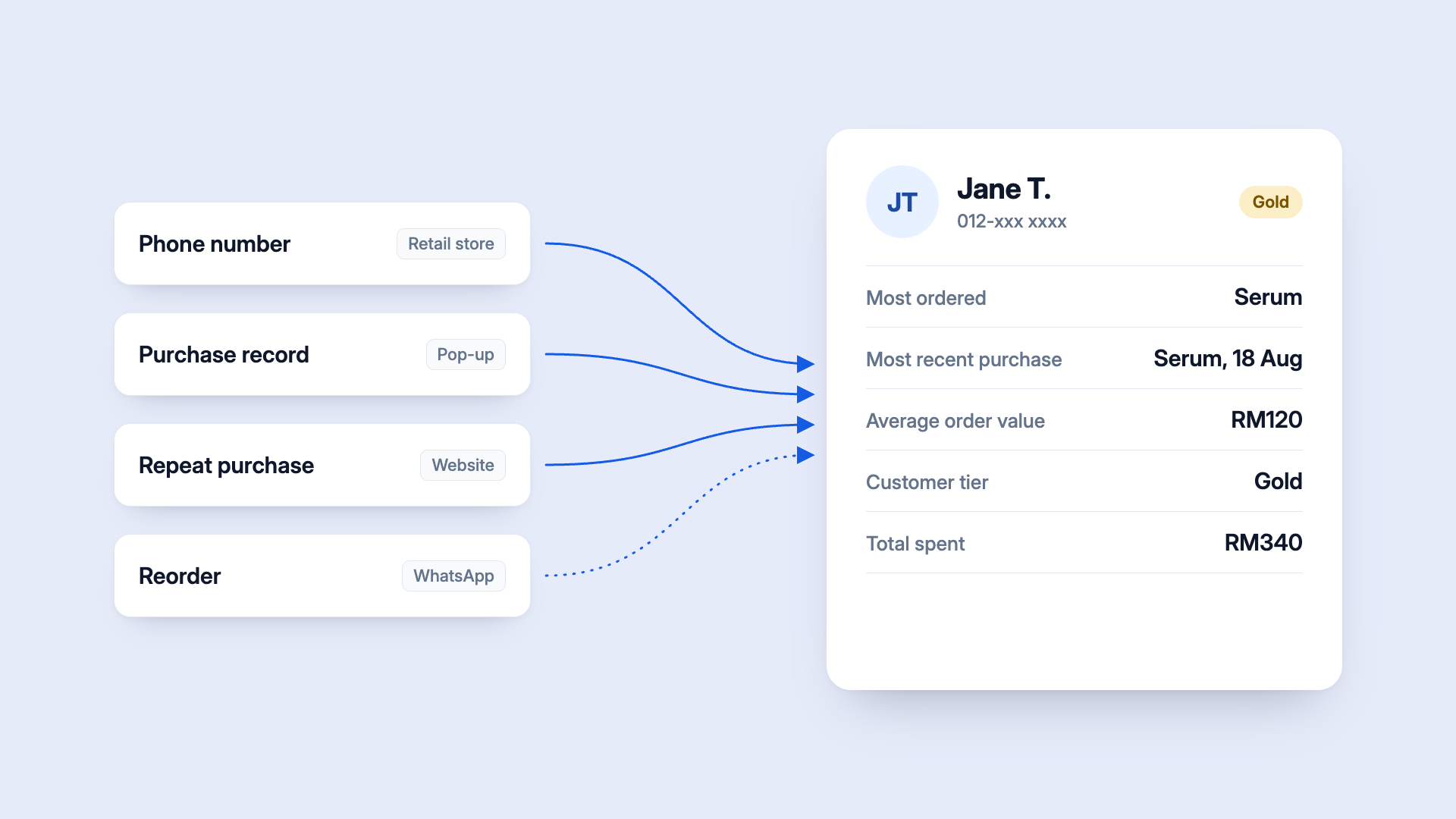 Most brands already collect plenty of data. What's missing is the connection between it.
Ideally, every piece of data you collect, from your website, your retail store and your pop-ups, builds into one profile that tells you:
This is what turns idle data into business opportunities.
How To Make Use Of Customer Profiles
1. Segmentation
Once every purchase connects to a person, you can group customers by:
- how recently they bought (recency),
- how often (frequency),
- and how much they spend (monetary value).
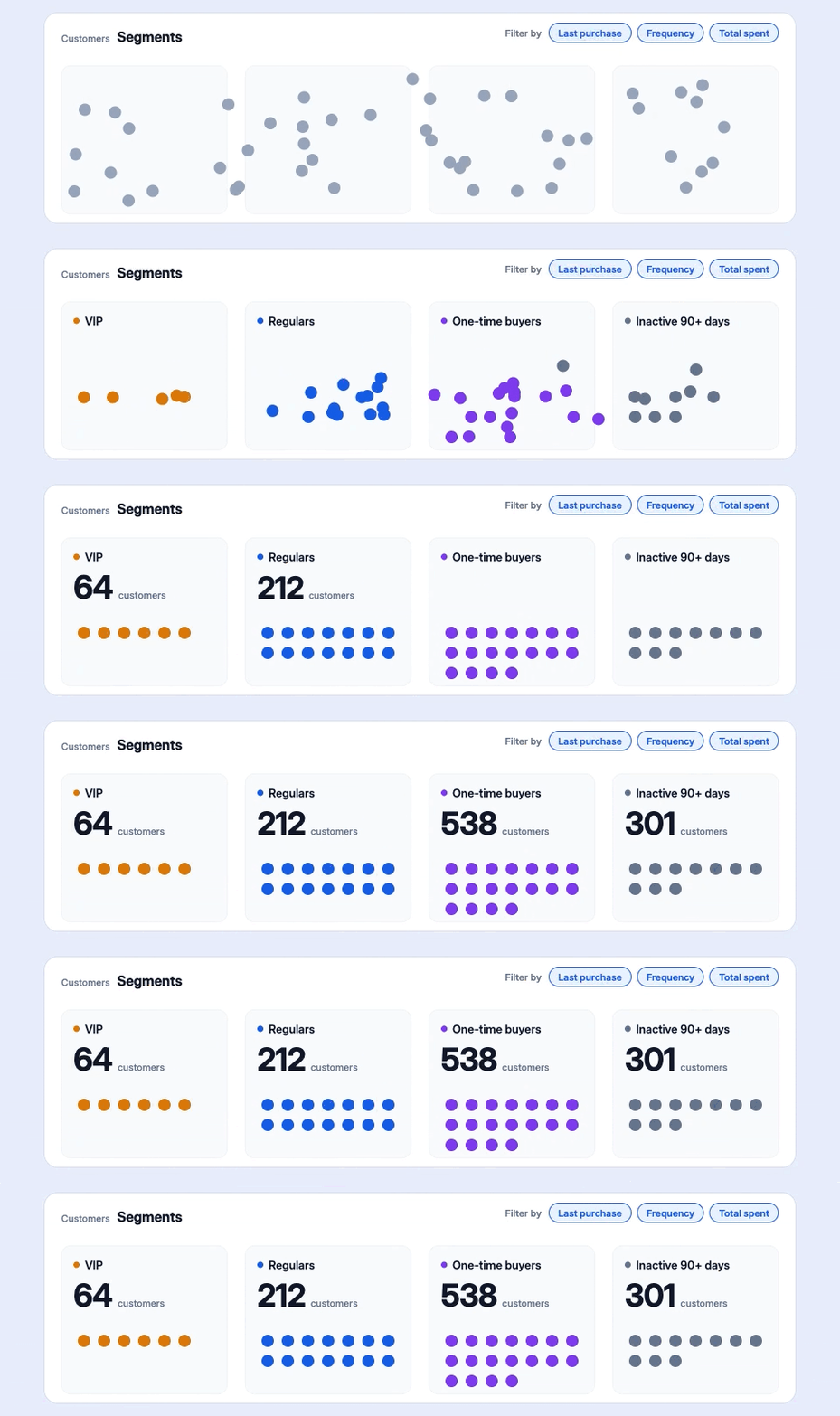
Your VIPs, your regulars, your one-time buyers and the customers who haven't been back in 90 days stop being one big list. Each group can be treated differently.
You can also see where they first came from, whether that's a pop-up, a campaign or a referral, and put more of your budget there.
2. Activate
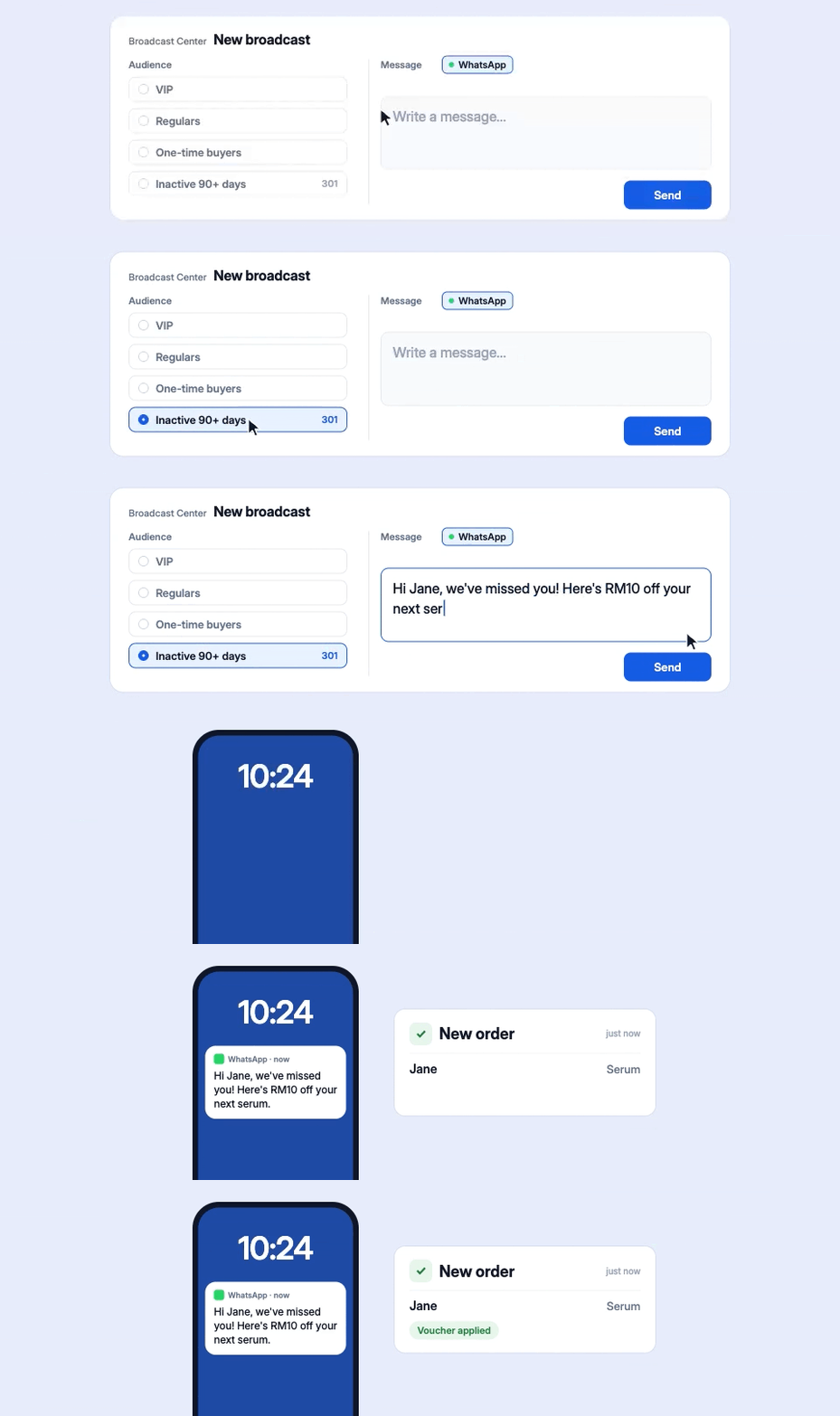
With segments in place, you can reach each group directly, on the channels they are active on.
Found a pool of customers who haven't bought from you since three months before? Send campaigns to them to reignite their interest in your brand. A discount code, a dedicated voucher, a check-in.
3. Retain
Give your best customers reasons to come back to you.

Points on every purchase, online or in-store. Member-exclusive discounts. Tiers that unlock better perks as customers spend more.
The more a customer is recognised and rewarded, the less reason they have to go elsewhere.
4. Advocate
Your most loyal customers can also bring in new ones. Shermaine Wong of Cult Creative works with brands on creator and UGC campaigns. Her advice for small brands that can't afford big KOLs:
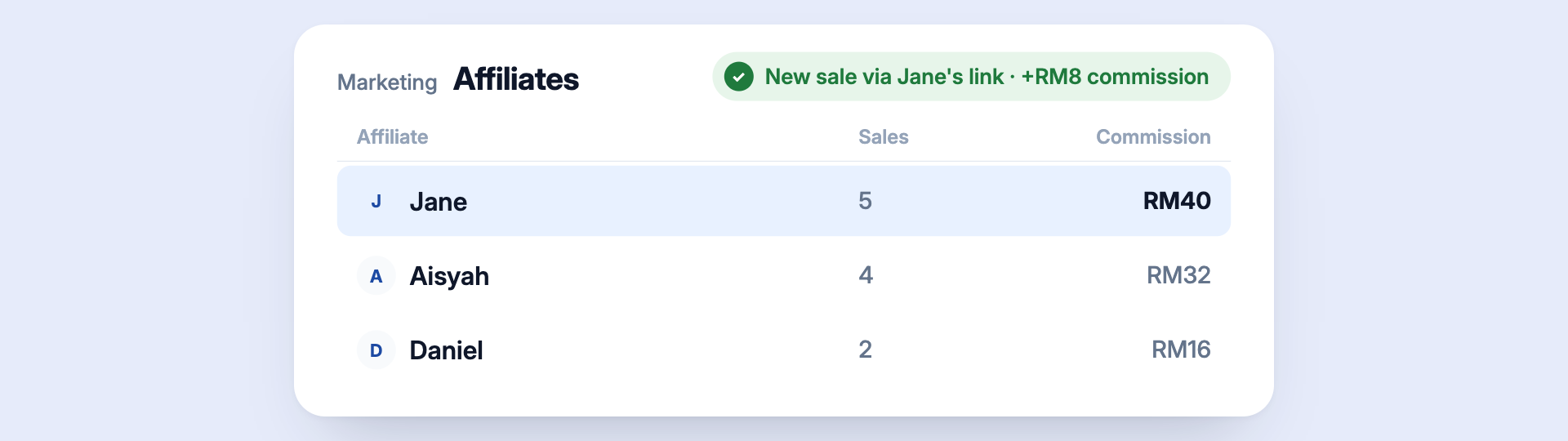 These customers already have the trust that paid creators are trying to borrow. Give them a simple brief, their own link to share, and a reward for every sale they bring in.
How Good Use Of Customer Data Impacts Business
Every brand owns some sort of customer data. The difference is whether it adds up to a person. The value isn't the database. The value is what you can do because you know who the customer is.