You Can Be Overstocked and Out of Stock at the Same Time
By Erica Loh · 13th October, 2026
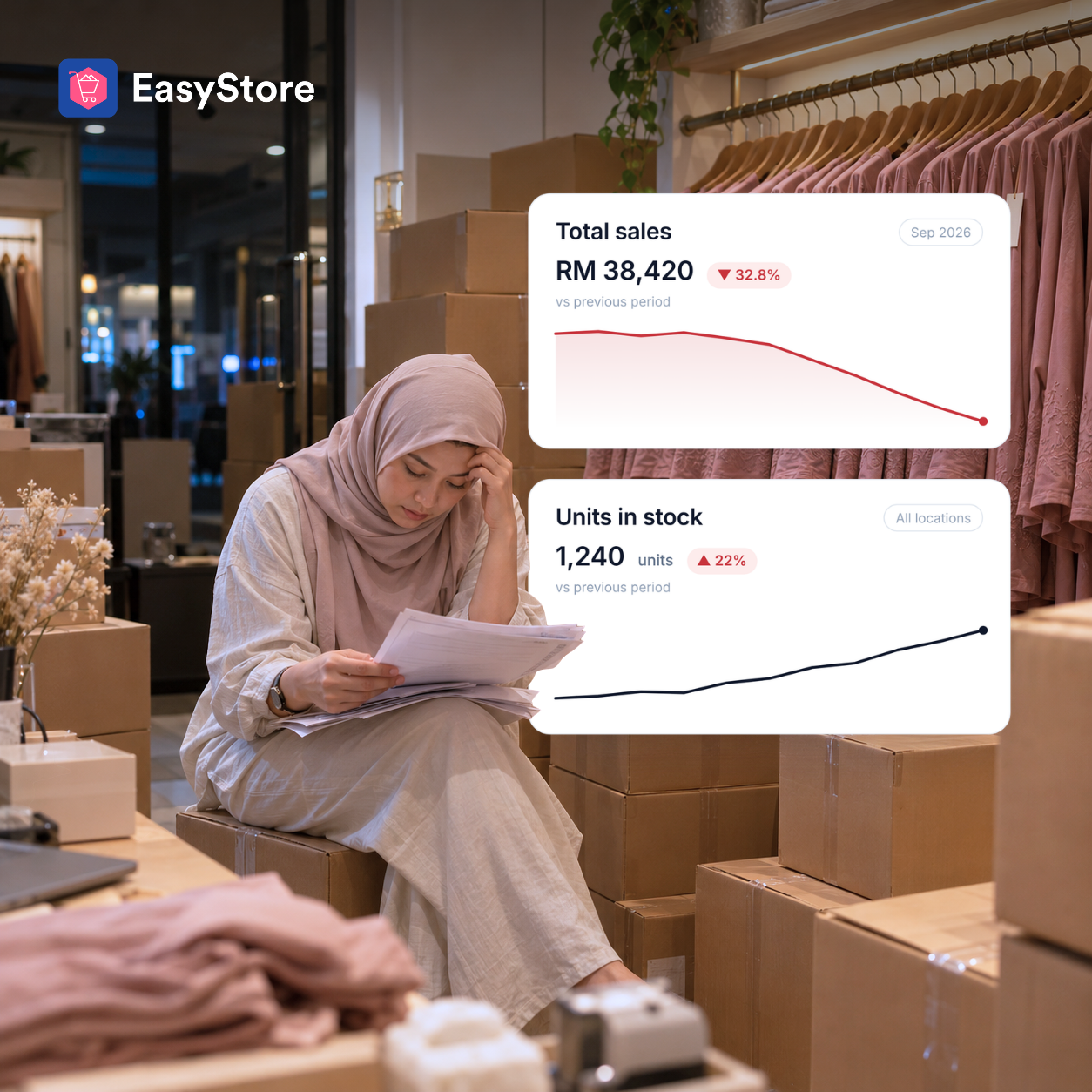
Table of Contents
You Can Be Overstocked and Out of Stock at the Same Time
At Retail Summit Asia 2026, Dania Kamalul Ariffin, Head of Marketing at Bayu Somerset, took the stage to speak about the brand's growth journey. 
Bayu Somerset is a Past-Forward fashion brand that started online during the pandemic. Today it sells across 18 outlets, its own website, marketplaces, community and CRM.
What holds all of that together, is one centralised inventory.
That’s the takeaway worth borrowing. To build a retail business that lasts, inventory has to be at the core, because every channel you add is another place stock can get stuck, or run out.
When You Can’t See Your Stock, You Pay Twice
Most retailers don’t have too little stock.
They have stock in the wrong place, or too much of the wrong thing.
The same business can be overstocked and out of stock at the same time, and it costs money in two directions.
Too much wrong stock, your cash is trapped on a shelf
A product sells well, so you reorder more of it. Common sense, right? But apparently, that could be a myth.
Sometimes, demand has already moved on, or it moved to a channel you weren’t watching closely. And now boxes of idle stock is sitting in the stockroom.
When stock is idle, cash is also idle.
Right stock, wrong place, loss sale
Sometimes you have exactly what the customer wants. But it's sitting somewhere your channels have no immediate visibility to: another outlet, the warehouse, the back room.
The counter says “out of stock,” and the customer walks away. These losses would never show up in a report, but it dims the opportunities that you could have taken.
The Fix: Inventory Intelligence, and How It Looks Like in Practice
Inventory intelligence means making stock decisions from what your data shows across every channel, rather than from memory or gut feel.
It shows up in three places: what you buy, how you sell what you already have, and how you keep your stock records accurate afterwards.
1. Buy closer to actual demand
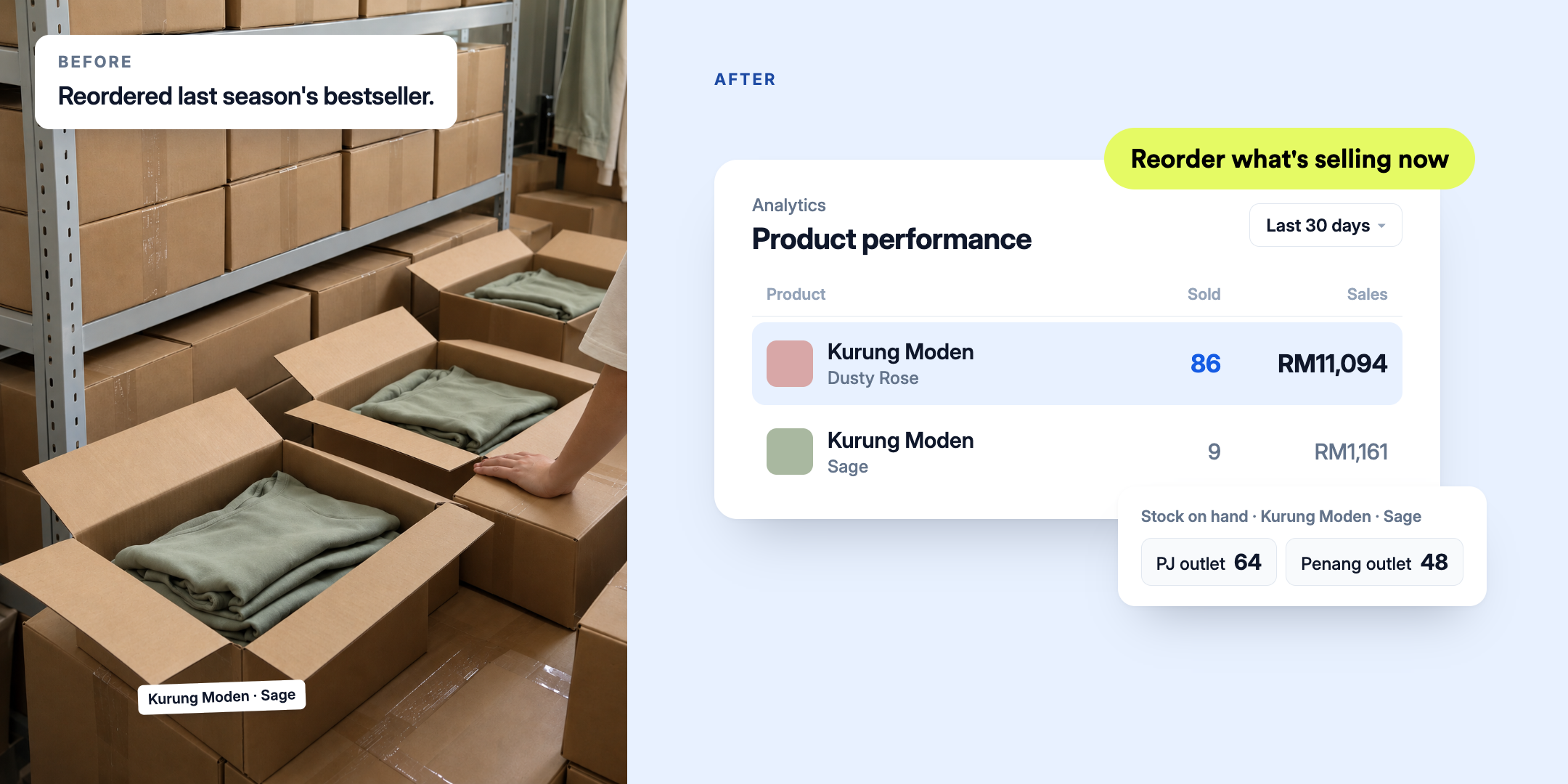
The question before every reorder sounds simple: what should I buy more of? Answering it well takes more than one number. Answer it with data, not by the vibes. ✨
Before you reorder, weigh three things together:
How EasyStore supports this decision
EasyStore puts the numbers in one place. The decision about how much to buy stays with you.
| EasyStore shows | What it helps you judge |
|---|---|
| Sales by channel | Where a product is selling, and whether that’s shifting between channels |
| Product performance | Which products are selling right now, which are slowing, and which earn their place |
| Stock by location | Whether you need to reorder, or can move stock you already have to where it’s selling |
2. Recover sales by selling stock that’s available elsewhere
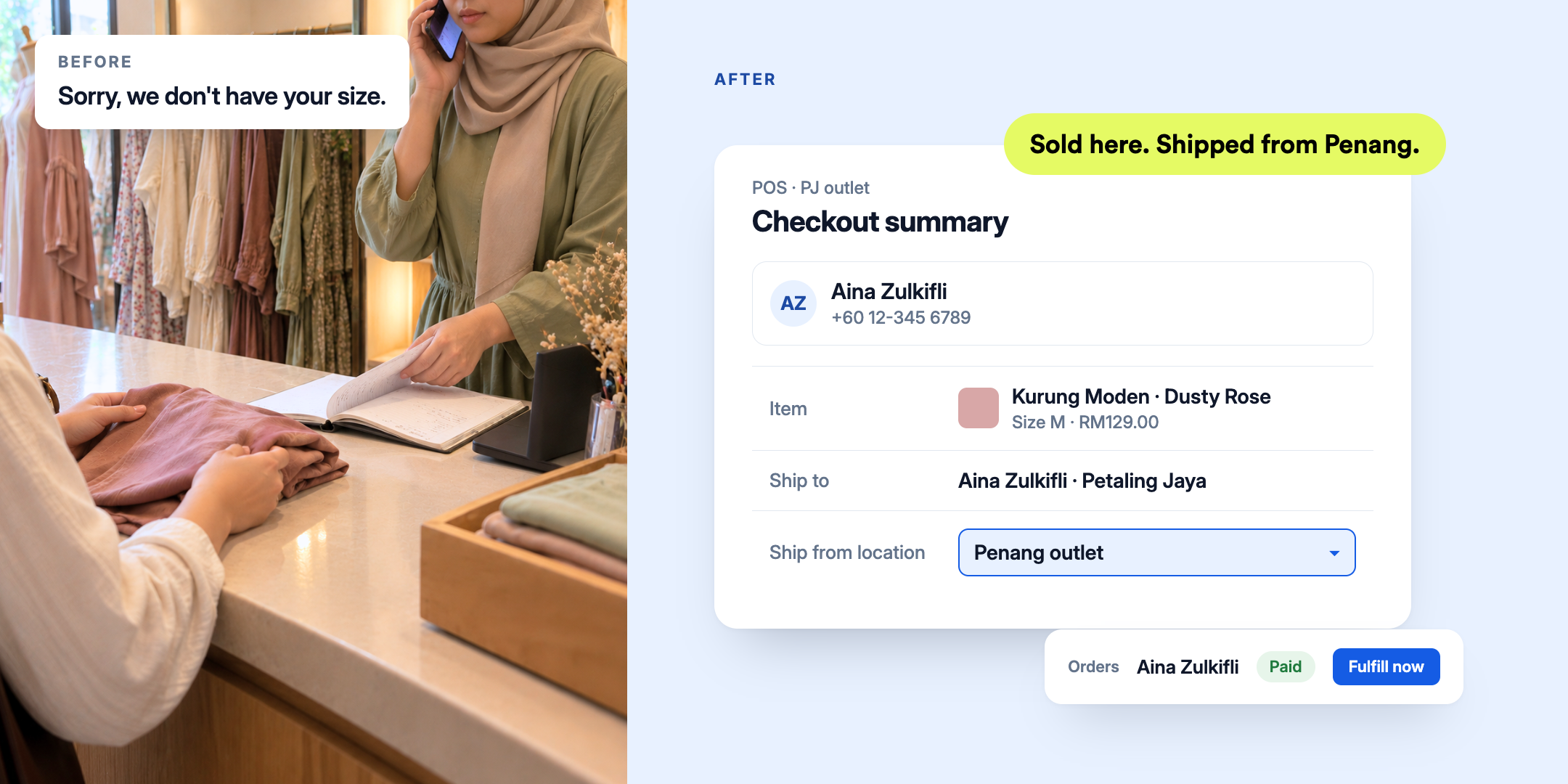
Inventory intelligence makes sure the stock you already have can be sold, wherever it sits.
A customer loves a piece, but it has run out in their size or colour. The only one left is in another store. Dania described the moment every retailer knows:
At Bayu Somerset, the answer is no. Their approach is to check stock across stores, offer to ship the item to the customer for free, and close the sale on the spot.
That only works when your inventory talks across outlets, and your logistics can get the item to the customer.
With EasyStore POS, outlet staff can sell an item held at another location and send it to the customer:
Your customer brings home what they want, and you bring home the sale. Everyone is happy.
3. Keep stock records accurate through cross-outlet exchanges
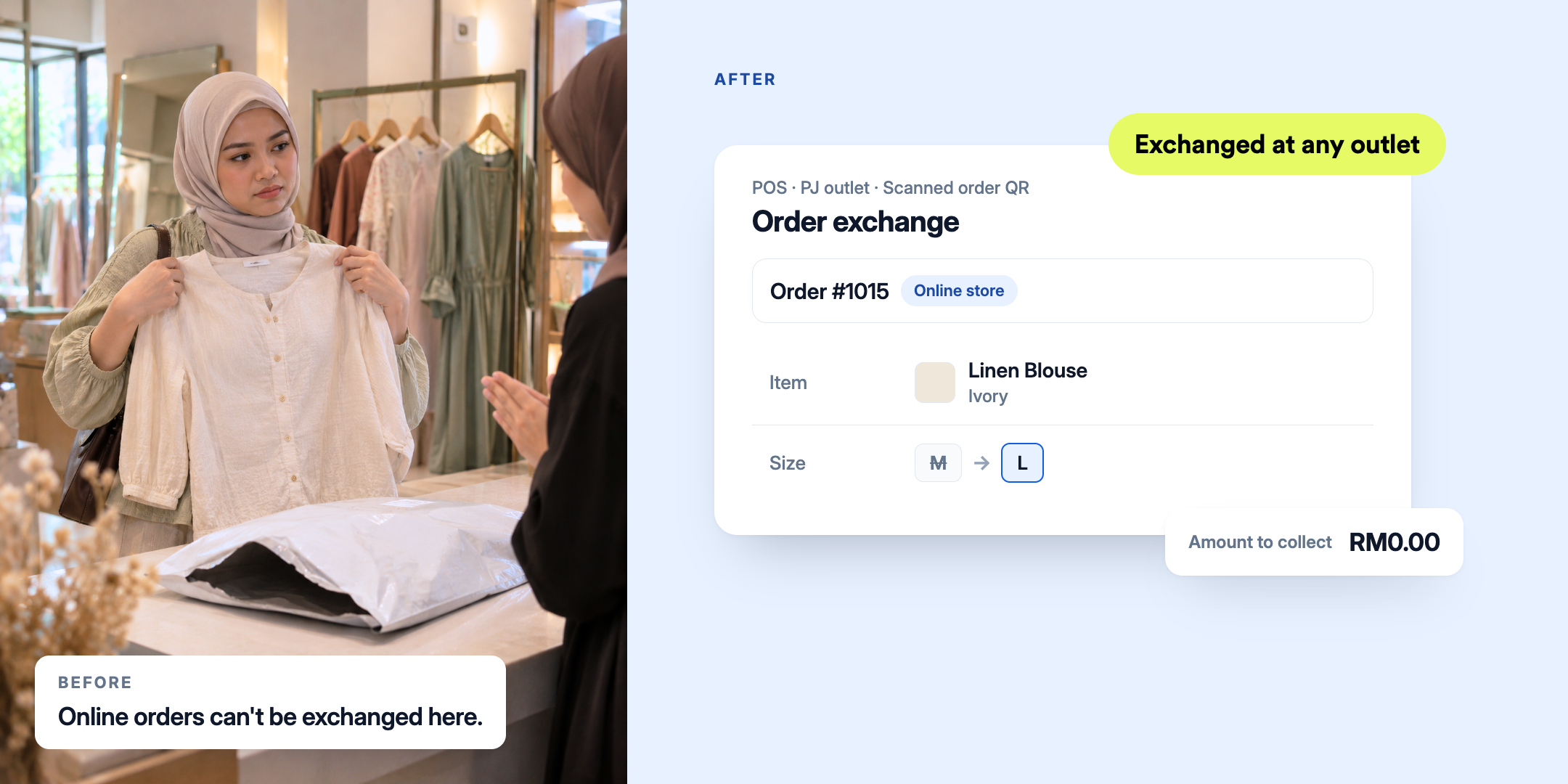
Selling from anywhere brings a follow-on question: what happens when the customer wants to swap?
Tara Tan, CMO of lingerie brand XIXILI, put the customer first:
When XIXILI first launched online, exchanges were inconsistent. So they set one rule: any store nationwide could accept them. This policy became one of the biggest reasons XIXILI’s online store grew.
For this policy to work, you have to solve another problem... You're right, that's inventory.
Every exchange takes one item off a store’s shelf. If that isn’t recorded, the store’s count drifts. The next time you check stock by location, or decide what to reorder, you’re working from the wrong number.
Accurate exchanges protect the two decisions above.
Before Your Next Restock
A Holistic View of Your Inventory
Whether you run 18 outlets, or one shop and a website, the principle is the same.
Every unit that sits unsold is cash you can’t use, and every customer who leaves empty-handed is revenue stalled with your stock. Better inventory decisions protect both.